




From catalyst estimates to confident changeout decisions
Selecting a catalyst system is one of the most consequential decisions in a hydroprocessing cycle. Vendor proposals, kinetic models, and performance guarantees provide indispensable guidance, but each supplier applies proprietary assumptions and modelling approaches. As a result, paper-based comparisons may not provide a fully consistent view of how competing catalysts will perform with the refinery’s actual feedstock, operating constraints, and product priorities. Independent testing is therefore the missing link between catalyst proposals and a confident selection.
The consequences extend beyond uncertainty about catalyst performance. A catalyst choice affects start-of-run temperature, cycle length, hydrogen consumption, product yield, operational flexibility, and exposure to upsets. Even when proposals appear similar on paper, differences in feed composition, nitrogen content, pressure, pretreatment severity, target conversion, and product-slate priorities can change the relative performance of the proposed systems. Without refinery-specific evidence, the selection team may struggle not only to identify the most suitable catalyst but also to build internal confidence, negotiate competing offers on a common factual basis, and demonstrate that the selected proposal offers the best operational and economic value.
Turning proposals into evidence
An independent benchmarking program turns the next changeout into a structured decision process. Competing catalyst systems—including the incumbent as a reference— can be operated in parallel with the refinery’s feed under directly comparable conditions. Testing at several conversion levels establishes meaningful yield-versus-conversion relationships rather than relying on a single operating point. This establishes how the competing catalyst systems compare in both activity and selectivity, revealing whether an apparent activity advantage translates into greater overall value or comes with trade-offs in middle-distillate yield, product quality, or hydrogen consumption.
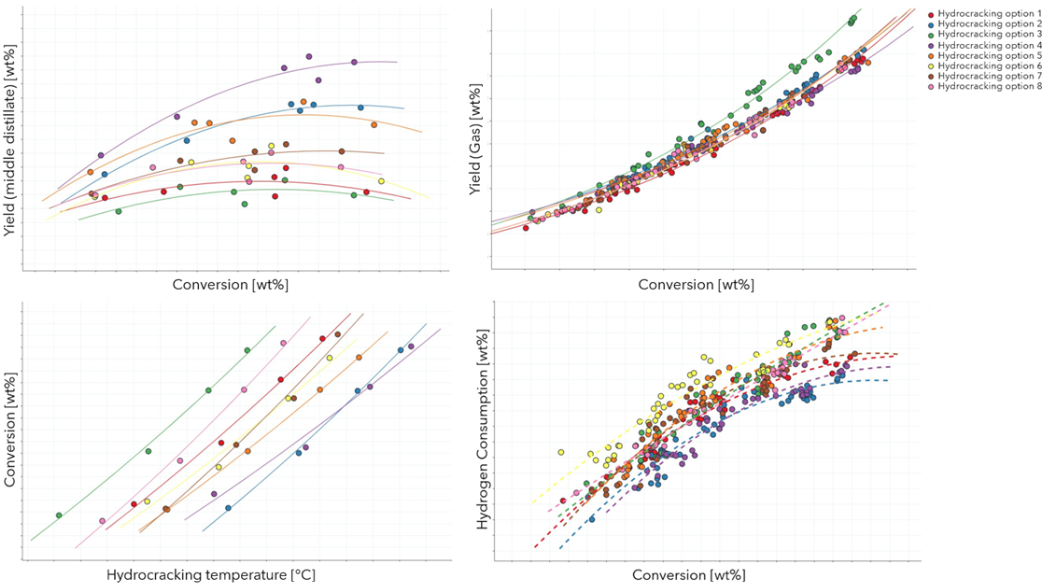
Figure 1 – sample performance charts for hydrocracking benchmarking
The strongest programs combine three capabilities:
- Representative operation: refinery-specific feeds, relevant pressure and severity, supplier-aligned activation procedures, and commercial loading ratios.
- Transparent comparison: parallel testing, controlled variability, mass balances, fractionation, product analysis, and confidence-aware data evaluation.
- Expert interpretation: continuous review of stabilization, measurement uncertainty, unexpected catalyst behavior, and the operating implications of each result.
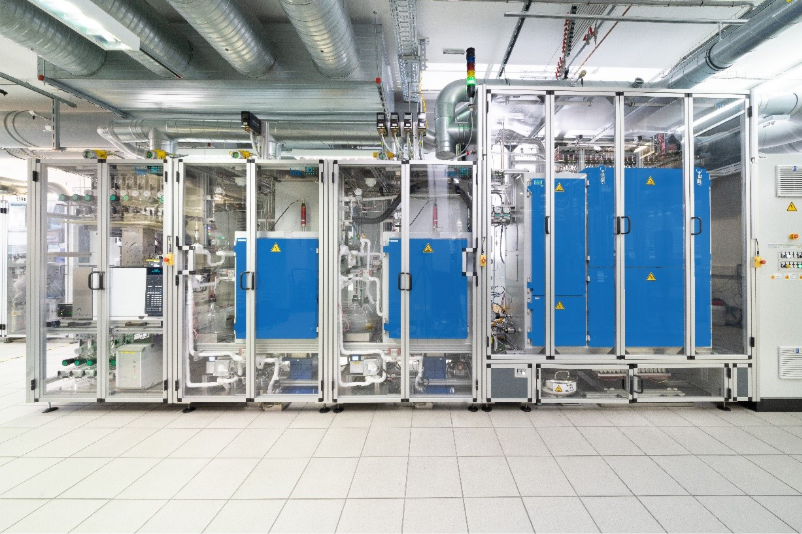
Figure 2 High throughput test system at hte’s laboratories in Heidelberg
The resulting conclusions become more specific and actionable: “Candidate B reaches target conversion at a lower temperature.” “Candidate C produces more middle distillate but consumes more hydrogen.” “The incumbent reproduces commercial performance, confirming that the test protocol is representative.” Instead of declaring one catalyst universally superior, the program shows the performance advantages and trade-offs of each system and identifies which option best fits the refinery’s economic and operational priorities.
In a catalyst benchmarking project with a U.S. Gulf Coast refinery, the incumbent catalyst was first tested to confirm that the pilot-plant protocol reproduced the performance of the commercial unit. Competing catalyst systems were then compared using the refineries feed under the same operating conditions. The refinery selected the most promising catalyst loading based on the results and installed it during the subsequent changeout. After start-up, the commercial hydrocracker’s start-of-run temperature was within 5°F of the value measured in the pilot plant, confirming that the independent test had provided a reliable basis for the catalyst selection.
This level of evidence increases confidence across operations, process engineering, procurement, and management. It also creates a reusable knowledge base linking feed quality, operating severity, catalyst configuration, and product response.
The next catalyst changeout should not begin with choosing a supplier. It should begin with generating the evidence needed to select the catalyst system that creates the greatest value in the refinery. The economic significance of catalyst selection makes independent evidence difficult to ignore. In benchmarking studies, refineries have estimated an annual value difference of approximately €5–30 million between the best- and least-performing catalyst systems, depending on unit capacity, product yields, hydrogen consumption, cycle length, and product values. This is not merely a calculated opportunity: in documented cases, refineries have selected and loaded a new catalyst system based on independent test results and subsequently realized the predicted additional value in commercial operation. Planning the benchmark before the selection deadline therefore allows the refinery to compare competing systems using its own feed and priorities—and to identify performance differences that may remain hidden in paper proposals.
To provide this evidence, hte combines contract research, laboratory systems, and software solutions to support integrated R&D workflows at laboratory scale. Its technologies connect automated experimentation, analytics, data management, and evaluation, both in hte’s own research laboratories and in hte-built units installed at customer facilities. Applied to catalyst benchmarking, these capabilities enable hte’s customers to move from the most promising proposal to the most convincingly proven catalyst.